
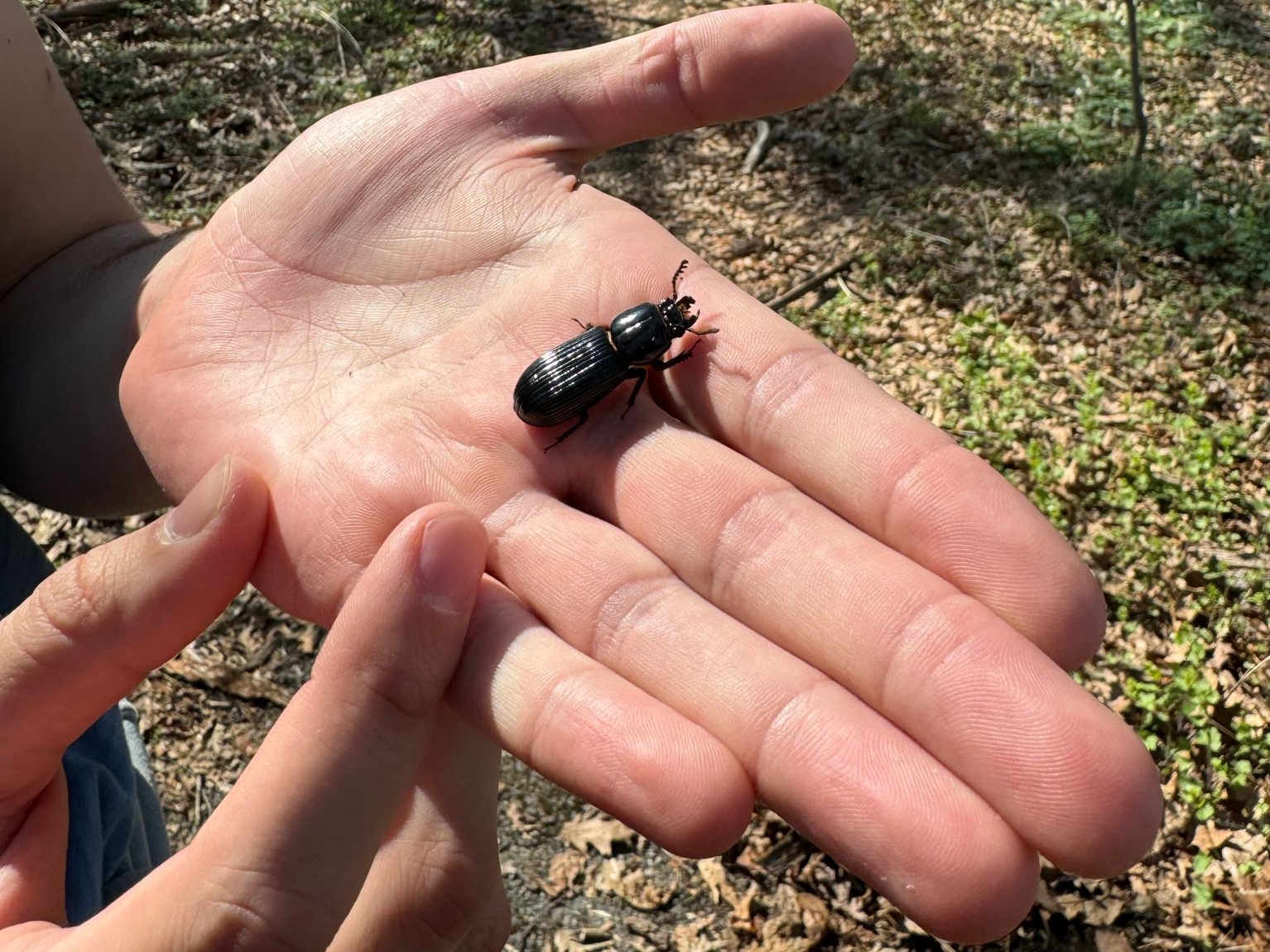
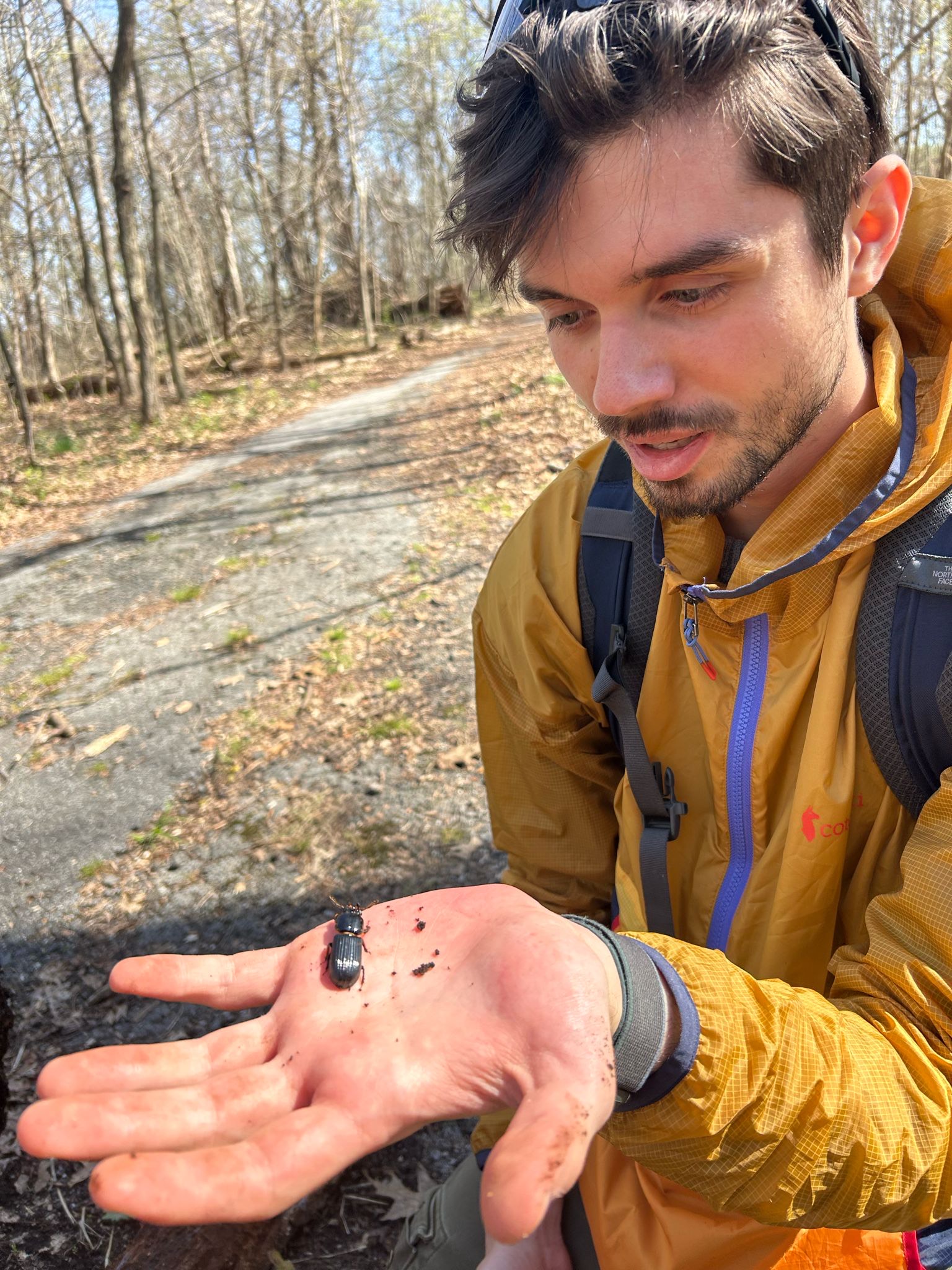
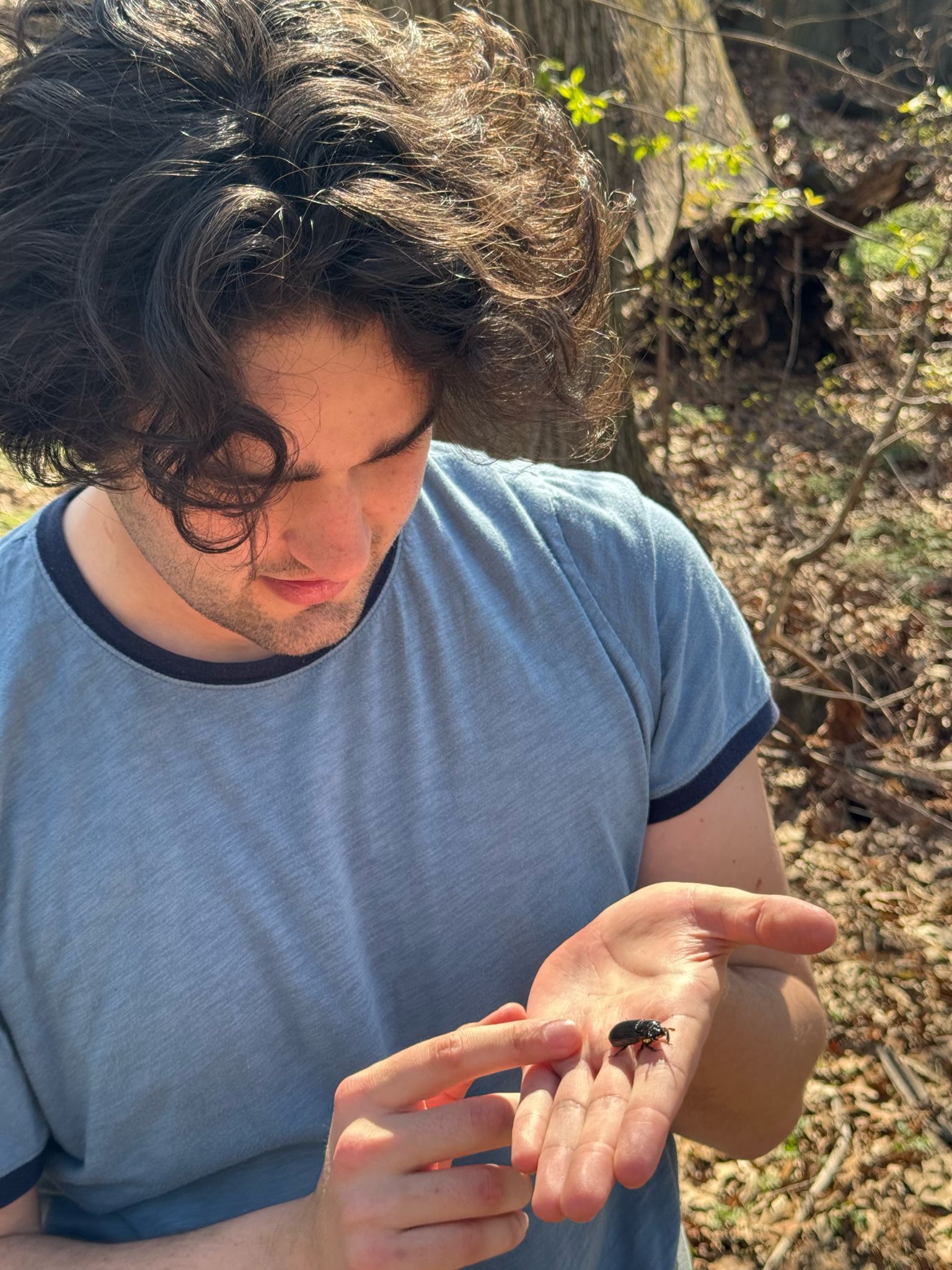
While scoping out where to place the traps, the #NYCbeetlesbustle team found its first beetle in Van Cortlandt, a bess beetle, patent-leather, or horned passalus beetle (Odontotaenius disjunctus). It is a large, glossy black, and has a distinctive horn-like projection on its head. Even more telling is the squeaking sound, called stridulation, it makes by rubbing body parts together (they are very chatty, social beetles). These beetles are very common in the tropics but only 5 species in the United States.
Ecological Importance
Bess Beetles are decomposers, meaning they feed on decaying organic matter such as fallen logs and leaf litter. As they burrow through the forest floor, they help break down dead plant material, facilitating the recycling of nutrients back into the soil. This process, known as decomposition, is essential for maintaining soil health and supporting the growth of new vegetation in the park.
Furthermore, Bess Beetles serve as a food source for other wildlife, including birds, small mammals, and amphibians. Their presence in New York City parks contributes to the overall biodiversity of these urban green spaces, enriching the environment and providing valuable habitat for a variety of species.
Observing Beetles in Action
Bess beetles are active in the springtime (April, May, June) and, if you’re fortunate enough to encounter one during your park visit, take a moment to observe their behavior. You may notice them moving slowly and methodically along the forest floor or congregating in groups beneath logs and debris. Bess beetles are very social and unlike some insects that scurry away at the slightest disturbance, bess Beetles are relatively docile and may even allow you to observe them up close. Although their jaws are strong, bess beetles are adapted for chewing rotten wood, not human skin. At most, they might give a mild pinch, but they can be safely handled.
Conservation Considerations
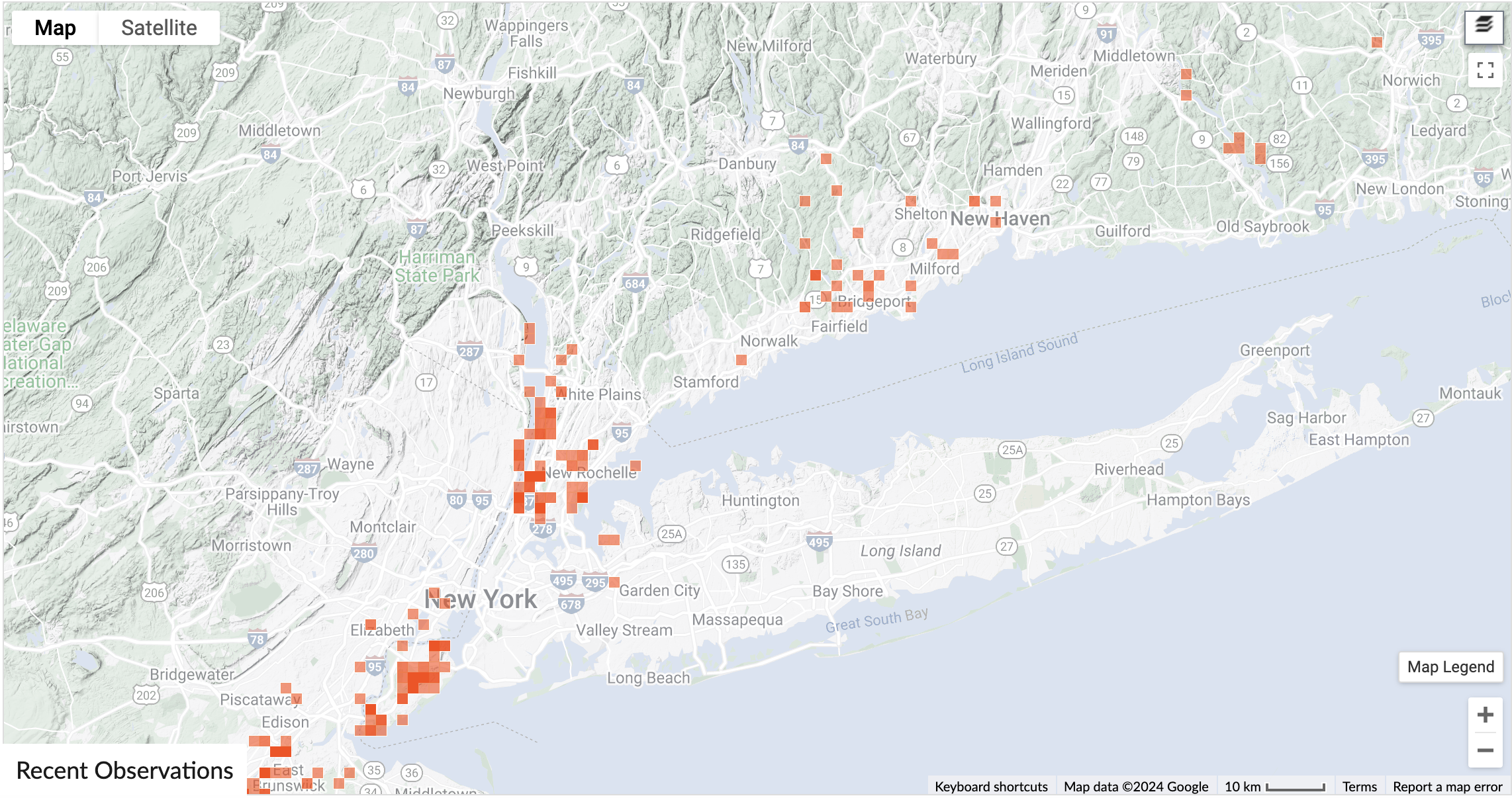
While Bess Beetles are relatively common in New York City parks, their populations, like those of many other insects, face threats from habitat loss, pollution, and climate change. As stewards of these urban green spaces, it is our responsibility to protect and preserve the biodiversity within them.
Simple actions, such as avoiding the use of pesticides in your garden and leaving course woody debris (logs, stumps, branches – bess beetle food), participating in park clean-up events, and supporting local conservation initiatives, can make a meaningful difference in safeguarding the habitats of bess Beetles and other native species.

 BRODIE BUG LAB