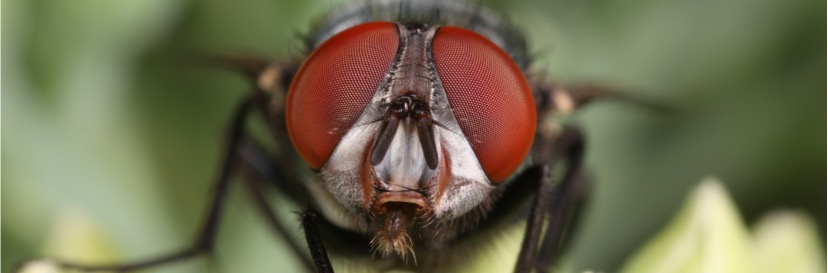
Insects usually use pheromones when locating the opposite sex but flies have huge eyes that take up 70% of the surface area that makes up their head (see above photo)! Flies have specialized units that make up their eyes (called ommatidia) to see polarized light, ultra violet, discern colors, have adapted to a wide range of environments, for SPEED (which is why they are difficult to hit with a fly swatter!), and specialized “bright zones”. The bright zones have a functional role during mate-seeking and oviposition resource-seeking behavior. Light reflecting off the fly’s wing during flight, or flashing wingbeat frequency (FWF or #FlashingWingbeats), represents an additional means of communication to help flies recognize animals belonging to their species and potential mates.
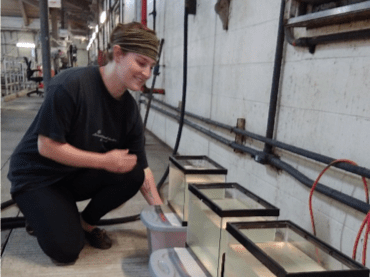
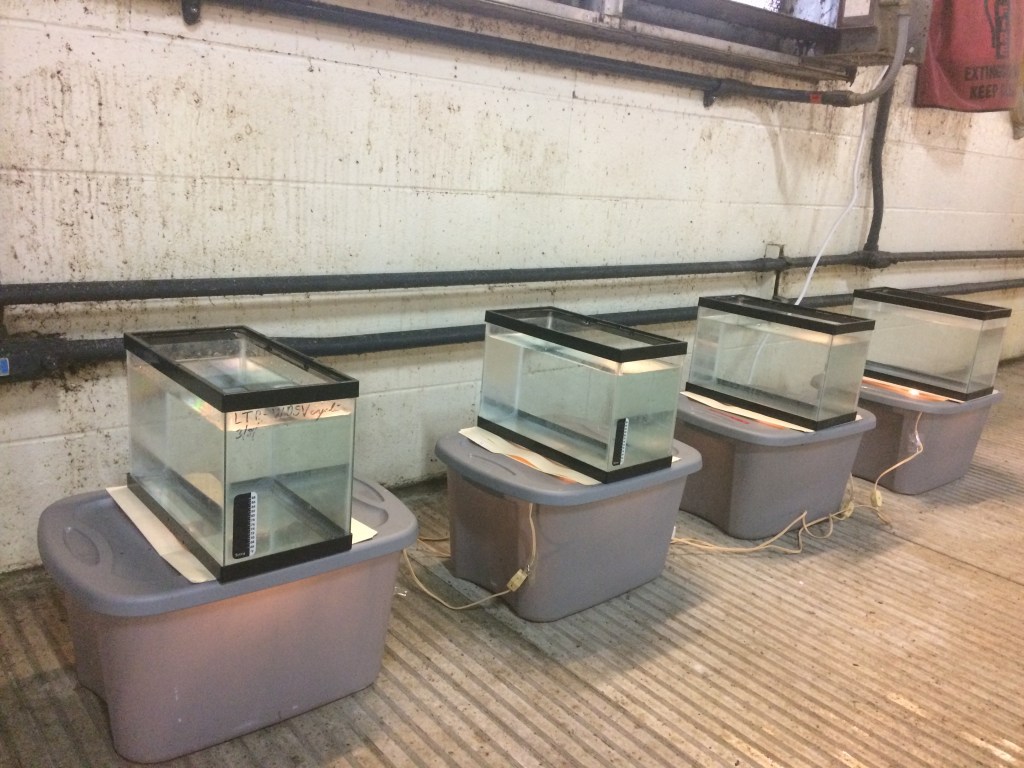
Using FWF to attract pestiferous flies at Alum Creek Water Reclamation Facility in Columbus, Ohio.Midge fly laying eggs [Photo: S. McCann].Swarm of midge flies (Family Chironomidae) [Photo credit: S. McCann]Setting up a polarized light experiment to attract and control pestiferous midge flies (Family Chironomidae) at Alum Creek Water Reclamation Facility in Columbus, Ohio.Normal (left) and polarized light (right) image of queen Ann’s lace (Family Apiacea), a fly pollinated flower.Normal (left) and polarized light (right) image of black-eyed Susan (Family Asteracea), a fly pollinated flower.Normal (left) and polarized light (right) image of golden rod (Family Asteracea), a fly pollinated flower.Polarized light experiment to attract and control pestiferous midge flies (Family Chironomidae) at Alum Creek Water Reclamation Facility in Columbus, Ohio.Polarized light experiment to attract and control pestiferous midge flies (Family Chironomidae) at Alum Creek Water Reclamation Facility in Columbus, Ohio.







 BRODIE BUG LAB